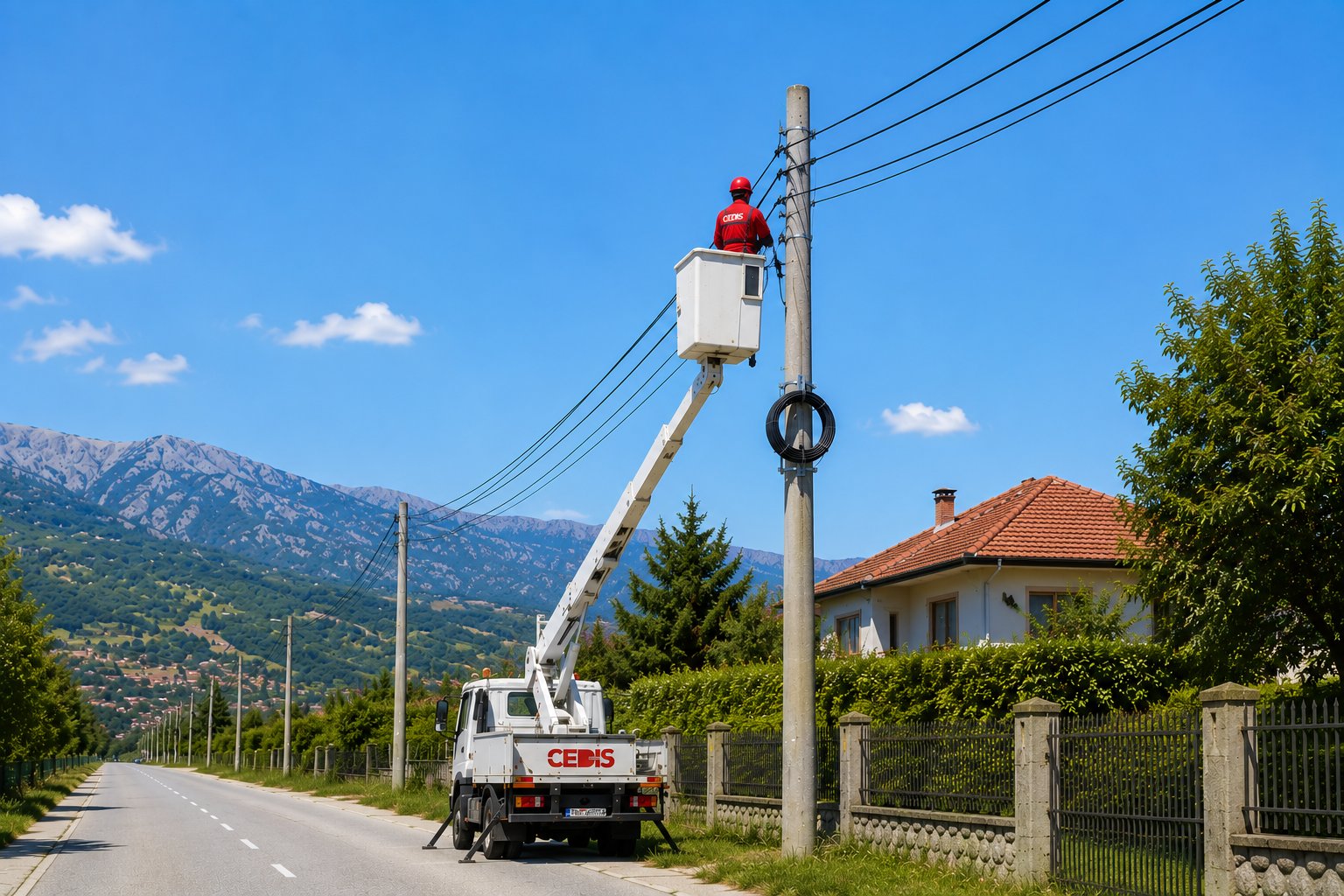

Over the past three years, CEDIS has invested a total of EUR 1.5 million in activating its own fibre-optic infrastructure, which enables fast, reliable and secure data transmission, enhances the protection of information systems and creates the conditions for more efficient management of the distribution network.
The investment covers the development of an active fibre-optic and IP-MPLS service network, data centres and modern IT and OT infrastructure, as well as the establishment of a backup site for information system recovery. These investments have created an important foundation for the digitalisation of business processes and the further modernisation of the electricity distribution system.
One of the key activities was establishing CEDIS’s active fibre-optic network in the central and southern regions of Montenegro. The network enables the connection of substations, business premises and the control centre, and is also one of the basic prerequisites for the operation of the SCADA system, which is currently being established.
The project to establish the active fibre-optic network was implemented after CEDIS took over significant infrastructure under a business cooperation agreement with EPCG. Fibre-optic cables have been installed on the poles of the 35 kV network over a length of approximately 400 kilometres, as well as across almost the entire low-voltage network.
To make full use of the existing fibre-optic capacity, previously separate fibre-optic routes had to be interconnected and an active network established. This has created the conditions for the fibre-optic network to be used, once the SCADA system is established, to communicate with substations and to develop CEDIS’s own WAN. CEDIS’s own WAN will enable employees and systems within the company to communicate securely with the central server infrastructure without relying on the telecommunications networks of other operators.
The fibre-optic network functions as the digital nervous system of the electricity distribution infrastructure, enabling fast and secure data transmission between different parts of the system. Once the SCADA system is established, it will be possible to monitor the condition of the distribution network in real time, detect faults more quickly and respond more efficiently. The ultimate goal is to reduce the duration of power outages and improve the quality of service for customers.
Another component is the development of an IP-MPLS service network, which will provide a high level of reliability and security, high capacity and real-time data transmission. The internal telecommunications network will be independent of other operators’ infrastructure and will enable the separation of different services, particularly those used to manage the electricity system. This separation, together with the implementation of appropriate security measures, will help reduce the risk of cyberattacks and unauthorised access to systems.
An important part of the digitalisation process involves building and developing data centres, as well as enhancing modern IT and OT infrastructure. IT infrastructure comprises computer, software and server systems for storing and processing data, while OT infrastructure refers to technologies used to monitor and control equipment and processes in the electricity distribution system. Connecting these systems enables more reliable, secure and efficient management of the distribution network.
The company is also working to establish a backup site for information system recovery in the event of an emergency. The aim is to ensure business continuity and the operation of key services if the primary site becomes unavailable. The backup site will be equipped with reliable server and communications equipment, reducing the risk of data loss and enabling systems to be recovered within an acceptable timeframe.
In addition to developing its own active fibre-optic network, CEDIS is also an operator of passive fibre-optic infrastructure, which companies have expressed an interest in using.
The development of CEDIS’s own fibre-optic, information and communications infrastructure is part of the company’s broader modernisation. Digitalisation is an important prerequisite for more secure management of the electricity distribution system, a more reliable power supply and better service for the citizens and businesses of Montenegro.