

Regulatorily allowed revenue, together with commitment, responsibility and care for the Montenegrin Electricity Distribution System (CEDIS), can generate profit and, consequently, company stability, its Executive Director, Zoran Đukanović, said.
“We have a significant number of employees and are obliged to achieve the planned results. However, we should not forget that CEDIS is a very complex system, spread throughout Montenegro, so it is not easy to organise work without difficulties. There are certain problems that make our work more difficult and that we deal with every day,” Đukanović told the Mina-business agency.
He added that this relates, above all, to the still high level of losses not covered by regulatorily allowed revenue, which causes significant damage to the company. There is also the unauthorised connection of consumers to the distribution network, although, according to Đukanović, the situation has improved considerably with the introduction of the AMM system and the installation of more than 255,000 so-called smart meters.
“There is also a risk arising from demands for ever-higher electricity quality imposed by the implementation of EU regulations, since international legislation also provides for penalties for failure to comply with standards in this area. Thanks to multimillion-euro investments in the previous period, the distribution network has been significantly improved, but it is not yet in a condition to guarantee compliance with these standards, particularly in rural areas,” Đukanović explained.
He said that major progress is evident in many areas, but that there is still considerable scope for improvement and further progress.
“We will continue working to improve the operational readiness of the distribution system, and we are determined to put an end to the unauthorised use of electricity. We will work to increase efficiency, as all companies that care about their future do,” Đukanović stated.
He noted that CEDIS, which was established a year ago, had accomplished a great deal during that period, as work had been carried out simultaneously in many areas to get the company on its feet and enable it to fulfil its core function.
“We took over all the functions, prepared and adopted numerous documents under the new Energy Law, renewed a whole series of internal procedures and defined our relations with Elektroprivreda (EPCG) as the parent company. We also changed the organisational structure to increase efficiency and performance. We are striving to improve coordination of activities at every level, in other words, to establish better communication and information transfer, as this is crucial for a clear division of responsibilities and accountability,” Đukanović specified.
He also believes that a good collective agreement was signed, which has eased employees’ concerns.
“This year was a transitional period during which an exceptionally large amount of work was done. Now that everything is up and running, we must do everything we can to become a successful company that generates profit,” Đukanović said.
According to him, CEDIS has good prospects for further growth and development. The company should, he added, further strengthen itself and become even more efficient over the next few years through continued investment in facilities and the network, implementation of investment projects, and ongoing business rationalisation.
“We must constantly improve our business processes, because no one else can make our company successful. The process starts from within. Joint effort and the coordination of all activities are needed to find the best solutions,” Đukanović stated.
He believes that no one working at CEDIS wants a company that is unsuccessful and unable to deliver promising projects.
“I believe our employees are aware of this and capable of positioning CEDIS, together with management, as a successful company in the long term,” Đukanović said.
He said the company’s business plan envisages an average net profit of around EUR 5 million over the next three-year period. To achieve this plan, he announced, particular emphasis will be placed on reducing electricity losses in the distribution system, with the aim of bringing losses down to 11 per cent of the total electricity received from the Transmission System Operator.
“The key and very challenging tasks also include implementing the investment plan for the next three-year period, totalling EUR 78 million. In addition to the continued installation of smart meters, the plan provides for the construction of new electricity facilities, the reconstruction of the distribution network, workforce optimisation, and investment in employees through professional development and specialist studies,” Đukanović said.
He added that the plan also includes an investment of almost EUR 1 million in environmental protection, including the sampling and assessment of the environmental impact of all distribution substations, as well as cost optimisation and bringing costs within the limits approved by the Energy Regulatory Agency (RAE).
Đukanović said that the first half of this year was marked by the implementation of the third phase of the strategic project to modernise electricity consumption metering. This project is extremely important for the Distribution System Operator in terms of network monitoring and reducing losses, as well as the expected benefits of opening the electricity market to suppliers and end users.
A particularly important benefit is the associated reconstruction of low-voltage networks and improved communications, as well as increased security and quality of supply.
“It is significant that, through the completion of the third phase of the project, CEDIS will meet its obligations under the Energy Law to equip at least 85 per cent of consumers with modern metering systems by 1 January 2019,” Đukanović noted.
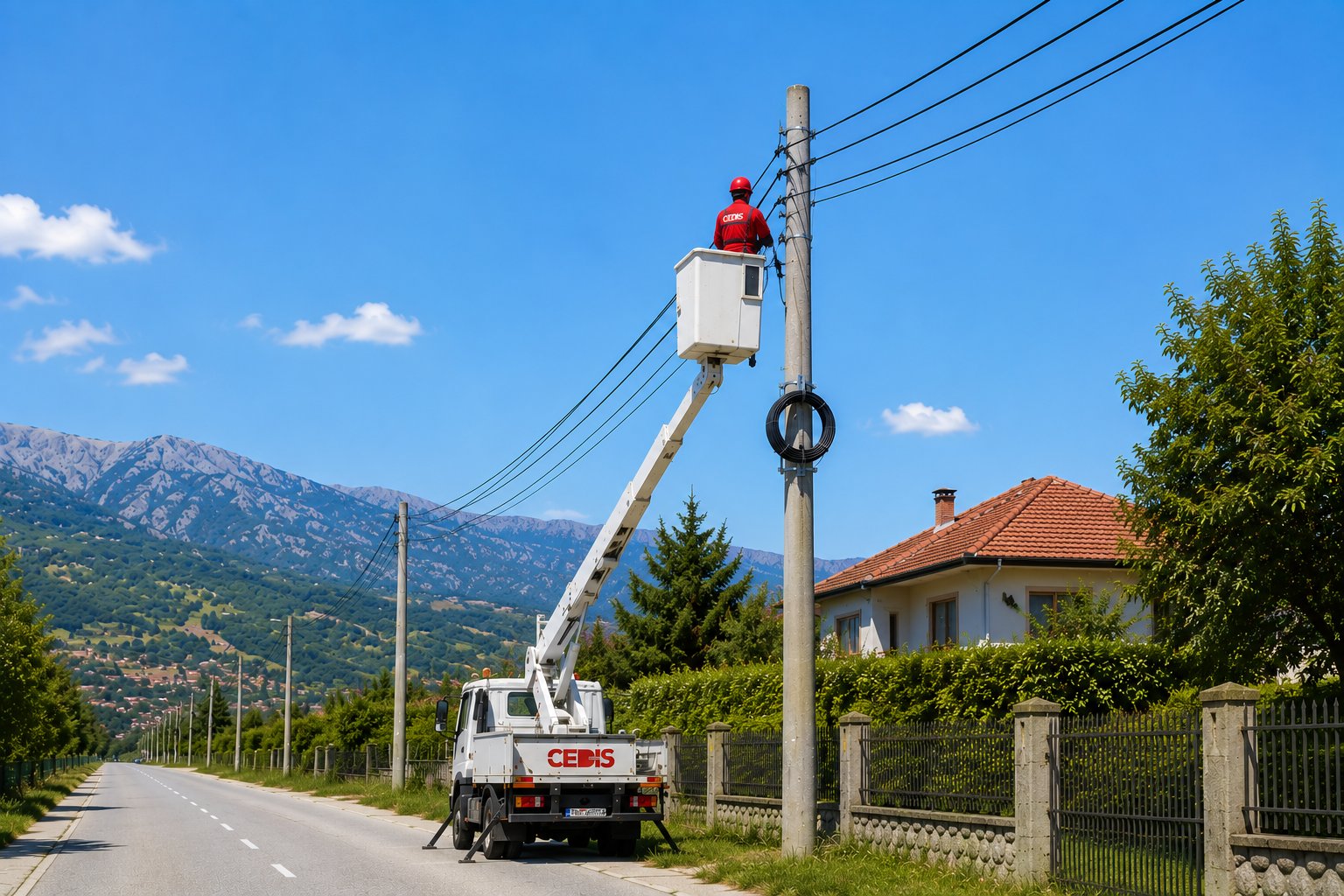
He said that the previous period had also seen the start of the SCADA system project, which concerns the control and automation of the medium-voltage distribution network in order to increase operational efficiency and reduce outage duration.
“There is also continued construction and reconstruction of the primary and secondary distribution networks, although investment plans could be implemented more successfully, despite the many objective constraints. The public procurement system involves excessive administration for distribution activities and makes our work and operations more difficult,” Đukanović said.
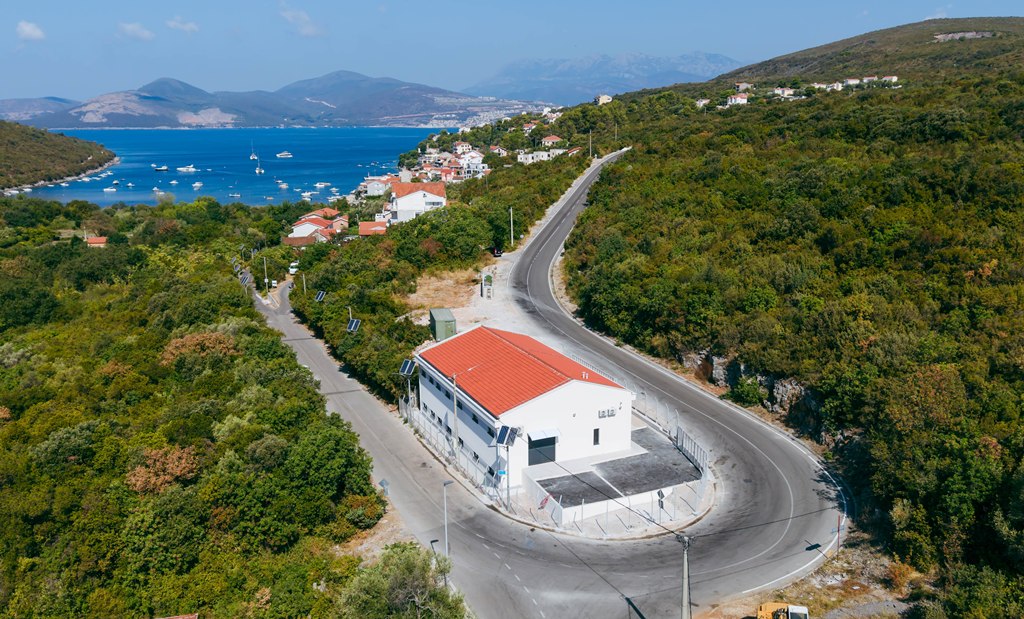
He stated that the investment plans for the coming period were very ambitious, and that the priority was the construction of new primary distribution network facilities in Ulcinj and Herceg Novi, due to the growing need for energy and capacity resulting from the construction of a large number of tourism and residential-commercial buildings in the area.
“The newly built 35/10 kV Klinci substation in Herceg Novi, which will soon be brought into service, cost EUR 2.2 million, while the value of the 35/10 kV Ulcinj substation and associated 35 kV lines, currently under construction, as well as the first phase of connecting the Ulcinj substation to the 10 kV network, is around EUR 2 million,” Đukanović specified.
He said that the replacement of 25 35/10 kV transformers was also planned for this year, with more than EUR 1.1 million allocated for the work, as well as the reconstruction of six 35/10 kV substations, which is being carried out as part of the project to ground the neutral points of the 10 kV network.
“These are important projects that will have a very positive impact on the system and the quality of supply. Investments totalling EUR 730,000 have been planned to enable the integration of 35/10 kV substations into the SCADA system,” Đukanović said.
He added that investment in the secondary network had increased considerably and that a large number of substations and cables had been completed. However, given the condition of the network, much more still needs to be done to ensure a stable system and reliable supply.
“A great deal of work was done in the previous period, while the best strategy for the next period is new investment and a constant increase in operational efficiency across all areas of the business. Continuous work to improve the quality of distribution is essential,” Đukanović stated.
He believes it is extremely important to continue the trend of reducing losses, accelerate the implementation of investments and improve the collection of charges for the unauthorised consumption of electricity.
“We must also improve our relations with customers and create a company that is well regarded by the public. The best way to earn trust is to provide high-quality electricity and continuous distribution, which is what the system was designed for. Our employees are always expected to give their best, and I expect nothing less, because we are all on the same side,” Đukanović said.
He said the company would continue working with commitment and responsibility to improve the operational readiness of the distribution system.
Đukanović said that one of CEDIS’s priority objectives was to ensure equal conditions of electricity supply and quality for all users of the distribution system.
“The separation of Distribution created an important prerequisite for this and gave a positive impetus to the functioning of the market when new suppliers emerge. This is a matter of commercial interest to potential suppliers. There is some interest, and I think it is only a matter of time,” Đukanović said.
He believes that the process will definitely accelerate now that an electricity exchange has just been established in Montenegro, creating the conditions for the exchanges of Balkan countries to develop into a regional market.